The stakes are real. In 2022, the SEC fined Morgan Stanley $35 million after disposal oversight failures, including no certificate received for 8,000 tapes.
A Certificate of Destruction (COD) is a formal record connecting identified assets to a completed destruction or sanitization event. This article covers what a COD contains, what it can't do, how to manage one, and how enterprise IT teams handle certificates across many vendors.
Key Takeaways
- A COD documents completed destruction or sanitization of identified items, not just pickup.
- Format and requirements vary by material and industry.
- Strong certificates tie together identifiers, custody, method, verification, dates, and signatory.
- Certificates support audits but create no automatic legal safe harbor.
What Is a Certificate of Destruction?
A certificate of destruction (COD) is a document issued after a provider destroys or sanitizes specific materials, records, or data-bearing assets. It should show:
- What was processed
- Who handled it
- When and where the work happened
- Which method was used
- Whether the result was verified
The term is used loosely. i-SIGMA's NAID specifications accept an erasure receipt or COD that identifies devices that were erased, so the label doesn't always mean physical destruction. No single form is legally sufficient for every US business or material type.
Destruction vs. sanitization for IT assets
Physically destroying a device ends its life. Sanitizing its data can leave it fit for reuse, resale, or refurbishment.
NIST SP 800-88 Rev. 2 (September 2025) defines three levels:
- Clear: Logical techniques effective against simple recovery
- Purge: Recovery infeasible with laboratory techniques; media may still be reusable
- Destroy: Media rendered unusable afterward
Methods include cryptographic erase, degaussing, shredding, and crushing, depending on the media.
Method matters. NIST notes that degaussing an SSD may finish successfully while sanitizing no data. A certificate that says only "destroyed" hides that. It should state the method and the verification result.

Related records
A COD is often confused with other paperwork:
| Record | What it establishes |
|---|---|
| Pickup or service receipt | Material type, quantity, custody transfer |
| Chain-of-custody record | Who handled media and when |
| EPA hazardous-waste manifest | Shipment tracking; receiving signature confirms receipt, not erasure |
| Downstream disposition record | Which approved processors received material |
| COD or sanitization certificate | The action, method, and result |
These can be issued together but serve different purposes. Morgan Stanley's contract separately contemplated asset reports, disposition reports, and CODs.
Who issues it and what it proves
The party performing or controlling the destruction generally issues it, through an authorized representative. NIST describes an organizational certificate signed by responsible personnel; third-party issuance isn't the only model. Downstream processors may supply supporting certificates.
The certificate records the provider's representation of completed work. It doesn't relieve you of choosing a qualified vendor, defining requirements, or keeping evidence.
Where Businesses Use Them
Common situations include:
- Laptop refreshes and employee offboarding
- Data center decommissioning and lease returns
- Retiring storage media
- Paper-record shredding
- Recalled products and regulated waste
Certificates matter most when multiple facilities, transporters, ITAD providers, or downstream processors touch the same assets. Each handoff is a place where records can break.
What Should a Certificate of Destruction Include?
A certificate should be specific enough that an auditor can tie it to the exact service event and assets. Missing serial numbers, vague descriptions like "mixed electronics," unsigned forms, and unexplained exceptions all weaken it.
No single universal field list exists. NIST, NAID, and R2v3 each describe contents differently. The elements below reflect common ground.
Parties and certificate details
- Customer's legal name; provider's legal name and contact information
- Processing facility or location
- Certificate number, work order or service number, invoice reference
- Authorized representative's name, title, signature, and issue date
Asset identification
For IT assets, list asset tags, serial numbers, manufacturer, model, media type, quantity, and owner. NIST's sample forms also call for the media source. For other materials, use lot numbers, waste descriptions, VINs, or document categories.
Asset-level detail beats generic descriptions, especially in high-volume or regulated programs.
Method, date, location, and verification
- Method and the standard or procedure followed, such as NIST SP 800-88 or IEEE 2883-2022
- Tool and version, where software was used
- Date and location of processing, and operator
- Verification result
NIST separates verification (did the process finish?) from validation (was it effective?). A good certificate also discloses failed items, inaccessible media, and assets diverted elsewhere. NAID specifications require failed-device identifiers to be reported.

Compliance statements and supporting evidence
The certificate should state which regulations, contract terms, or customer instructions governed the work, without claiming one standard applies everywhere. Reference supporting records when scope requires them: custody transfers, transport records, manifests, erasure logs, photographs, or downstream certificates.
R2v3 requires software-generated records per unique device identifier; operator-built spreadsheets are insufficient. Tamper-evident reports and audit trails help for distributed programs.
Review checklist for IT teams
- Confirm customer and vendor names are correct
- Check that asset identifiers and quantities match your inventory
- Verify the stated method and verification status
- Confirm dates and an authorized signature
- Read exception notes and assign a next step to every missing, failed, or redirected asset
- Match the certificate to the originating work order
Why Do Businesses Need a Certificate of Destruction?
A COD gives an asset's lifecycle a documented endpoint and shows you followed your own destruction, retention, privacy, and security procedures. But not every business is legally required to have one.
Compliance and audit readiness
The major US rules don't expressly mandate a COD:
- FTC Disposal Rule (16 CFR 682): reasonable disposal measures, including vendor due diligence
- HIPAA (45 CFR 164.310): final-disposition procedures and ePHI removal before reuse
- GLBA Safeguards Rule: secure disposal within two years of last use, plus provider oversight
- PCI DSS v4.0.1: destroy hard copy and electronic media holding cardholder data
- California Civil Code 1798.81: reasonable steps to make records unreadable
A COD is how you prove you met these duties during internal audits, customer reviews, regulatory inquiries, or insurance reviews.
Retention depends on the source. HIPAA Security Rule documentation must be kept six years, while e-Stewards requires records for at least five years. Check your regulation, contract, and policy.

Data-security and privacy risk
Drives, phones, and backup media passing through several parties are easy to lose track of. NAID's 2017 study found PII on 40% of more than 250 resale devices. That historical sample used basic methods; it is not a current enterprise failure rate.
A certificate proves a documented process existed. It doesn't guarantee data was unrecoverable if the method was inadequate.
Chain of custody and vendor accountability
Certificate details let you reconcile original inventory against pickup, transport, processing, and final disposition. That matters for distributed enterprises, MSPs, and anyone using several downstream vendors. NIST warns that broken tracking limits what a certificate can cover.
Reuse and recovered value
Secure sanitization can let eligible devices be resold or redeployed, while physical destruction suits certain media or policies. Pairing a certificate with a disposition or resale record documents both data protection and reuse. Globally, only 22.3% of e-waste was documented as formally collected and recycled in 2022, per the UN's Global E-waste Monitor.

What a certificate cannot do
A COD isn't automatically a legal document in every context. It doesn't replace a manifest or permit, and it doesn't prove the vendor was qualified or that every rule was followed. For regulated materials, confirm requirements with compliance, legal, environmental, or security teams.
How Do You Get and Manage a Certificate of Destruction?
Choose the provider. Match them to your media type, method, geography, and downstream vendors. Look for relevant credentials: NAID AAA endorsements, R2v3 with the right Appendix B scope, or e-Stewards. ISO/IEC 27001 certifies a management system, not an individual erasure result. Ask whether they provide asset-level documentation.
Define terms before handoff. Put in writing:
- Inventory and identifiers
- Chain-of-custody expectations
- Destruction method and verification requirements
- Exception process and certificate format
- Delivery timeline and retention responsibilities
Validate afterward. Compare the certificate to inventory and custody records, investigate discrepancies, and store it where authorized teams can retrieve it during an audit.

Coordinating certificates across distributed IT programs
Across many locations and vendors, the problem becomes coordination. Evercycle is enterprise software that orchestrates existing vendors, internal teams, and systems. It doesn't ship or process hardware, and it doesn't issue a provider's destruction certificate.
It gives enterprises and service providers visibility across providers:
- Time-stamped chain-of-custody data
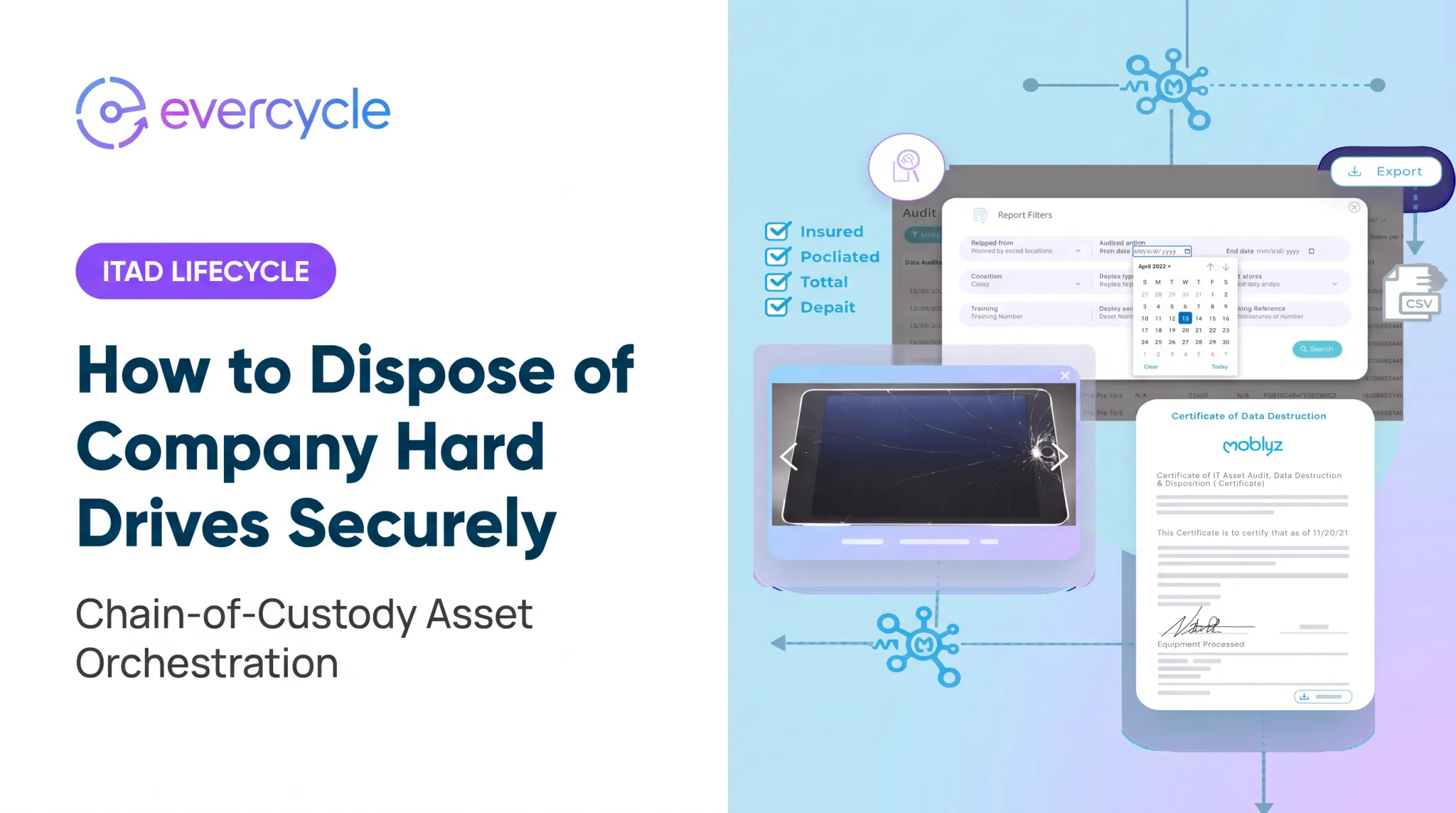
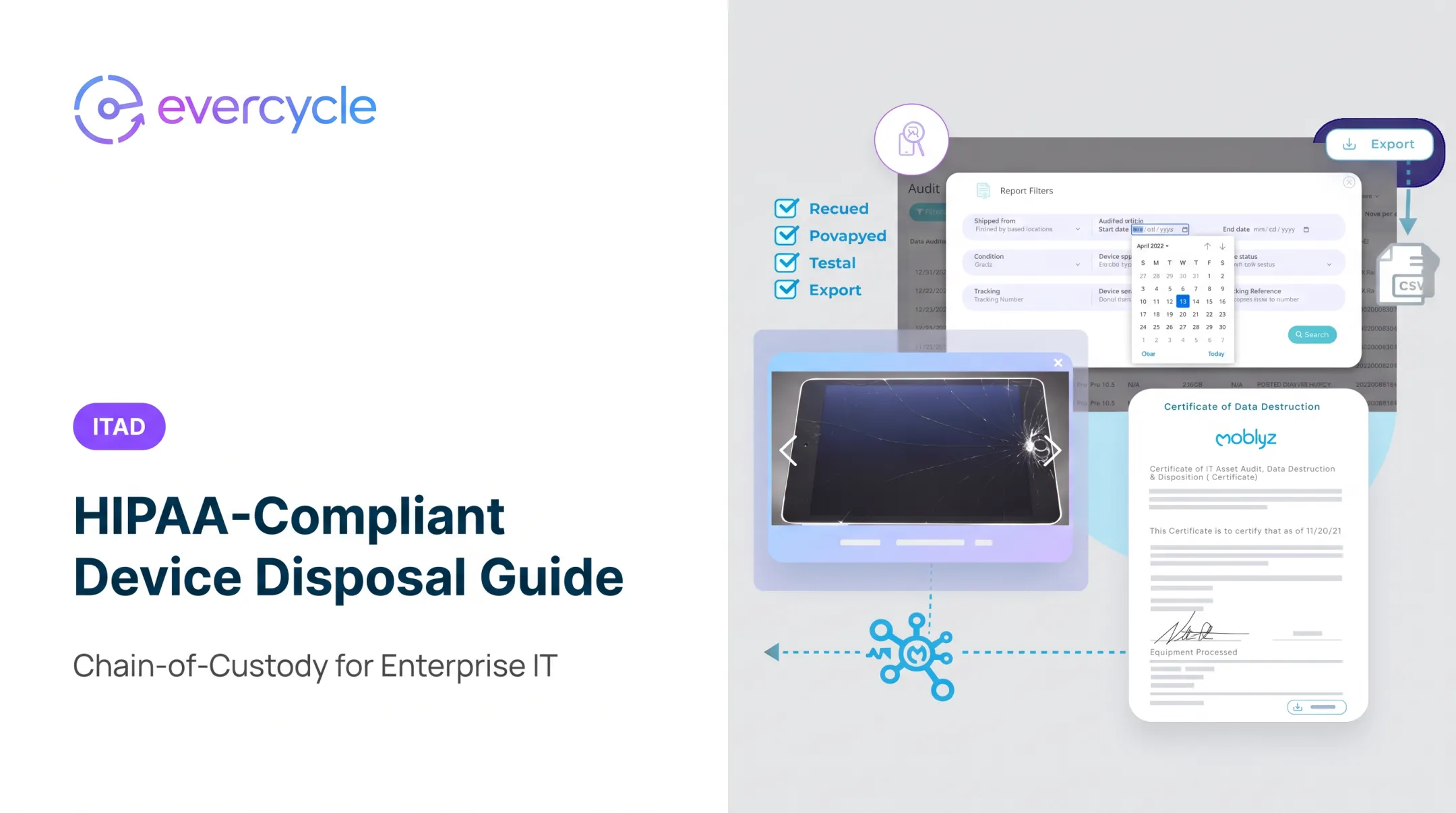
- Device audit reporting that surfaces certificates of data destruction and erasure results alongside asset records
- Exports to ERP systems or databases
For high-volume, multi-location programs, that helps keep certificates matched to assets. Evercycle's 2025 case study covered a Fortune 500 recovery spanning 19 countries and 14 ITAD partners.
Frequently Asked Questions
How do you get a certificate of destruction?
Engage a qualified provider, define scope and documentation requirements in writing, and verify completion. Then request or retrieve the certificate after destruction or sanitization.
Can anyone issue a certificate of destruction?
The organization performing or controlling the destruction generally issues it. Verify the provider's qualifications, authorization, and fit for your material and jurisdiction.
What should a certificate of destruction include?
Customer and provider details, asset identifiers, method, dates, verification results, applicable standards, exceptions, and an authorized signature.
Is a certificate of destruction a legal document?
It depends on context and applicable requirements. It's typically evidence of completed work, not a universal legal form or automatic liability transfer.
What is the NIST standard for data destruction?
NIST SP 800-88 Rev. 2, Guidelines for Media Sanitization, published September 2025. The right method depends on media type, sensitivity, and required assurance.
What is a data destruction certificate?
It documents secure removal or destruction of data from a specific device, medium, or system. It should record the method, asset identifier, verification result, date, and responsible party.