IT asset disposition (ITAD) is the controlled retirement of business devices: recovery, data sanitization, reuse, resale, and recycling. Reselling it doesn't mean buying a warehouse or hiring technicians.
The model is simple. The MSP owns the client relationship and the service promise. An ITAD partner handles the physical work. Software ties together requests, shipping, asset records, and reporting.
Key Takeaways
- ITAD extends refresh, offboarding, and endpoint services MSPs already sell.
- A partner carries the facilities, equipment, and processing risk.
- Define responsibilities, pricing, and escalation before the first project.
- The MSP stays the client's main contact while the partner documents outcomes.
Why MSPs Should Resell ITAD Instead of Building It
ITAD fits the services MSPs already deliver
Every hardware refresh, device replacement, office move, merger, and offboarding creates a retirement event. Without an ITAD offer, your responsibility ends when the new device is deployed, and the old one becomes the client's problem or a stranger's.
Adding retirement lets you cover the full device lifecycle. Clients already trust you with the front half.
The burden of running ITAD in-house
Building it yourself means owning all of this:
- Collection, packaging, and transportation
- Serialized inventory
- Data sanitization or destruction
- Testing, resale, and recycling
- Downstream vendor oversight
- Client reporting
Fragmented internal processes cause missing assets, unclear custody, inconsistent data handling, and compliance claims you can't support. Meanwhile, your technicians stop doing managed services work.
The exposure is real. Blancco and Ontrack found sensitive data on 42% of 159 used drives bought on eBay. It's a small marketplace sample, not an enterprise rate, but it shows what poor disposal can leave behind.
The commercial and relationship upside
One-time disposal requests can become a repeatable service tied to refreshes, offboarding programs, and lifecycle reviews.
CompTIA's research shows 30% of pure-play MSPs still handle non-recurring work such as product sales and consulting. Project-based revenue sits comfortably beside recurring contracts.
No reliable benchmark exists for recurring ITAD growth specifically, so build your own business case from your client base.
Referral, reseller, co-branded, and white-label models differ
- Referral: you introduce the client and may earn a fee. You don't contract or deliver.
- Reseller: you hold the transaction and customer relationship, and may add services.
- Co-branded: both brands appear. Define the contracting party and responsibilities in writing.
- White-label: the partner's service is delivered under your brand.

More control over the customer experience means owning more pricing, communication, service levels, and escalations.
What the Resold ITAD Service Should Include
Scope assets and disposition requirements
Document device types, quantities, locations, ownership, data-bearing components, timing, and pickup needs. Then record the client's rules for each asset: redeploy, resell, recycle, donate, destroy, or store. A generic path for every device is how mistakes happen.
Recover devices through controlled logistics
Remote employees need return kits and tracked shipping. Larger projects need scheduled pickups, site collections, or white-glove removal. Assign clear owners for:
- Packaging and pickup scheduling
- Failed returns and damaged shipments
- Missing equipment
- Exceptions needing MSP or client approval
Protect data and maintain chain of custody
Data-bearing devices need documented sanitization or destruction. NIST SP 800-88 Rev. 2, published in September 2025, defines three levels: Clear, Purge, and Destroy. Rev. 1 has been withdrawn, so don't reference it.
Verify the partner's procedures, evidence, and certifications. Certifications such as R2v3, e-Stewards, and NAID AAA cover different scopes, so check the specific facility and service. Never promise compliance on the partner's behalf.
Determine the best disposition path
Treat these as separate outcomes:
- Intake reconciliation, testing, and grading
- Refurbishment
- Redeployment or resale
- Recycling or destruction
Not everything retired is waste. Agree up front whether proceeds are shared, credited against service fees, or applied to future hardware purchases.
Deliver asset-level reporting
Clients may need:
- Inventory reconciliation and serial numbers
- Custody events
- Sanitization or destruction evidence
- Final disposition and resale settlement
- Recycling documentation
Consistent reports protect your reputation and give clients evidence for audits, internal controls, and sustainability reporting.
Add an orchestration layer without becoming the processor
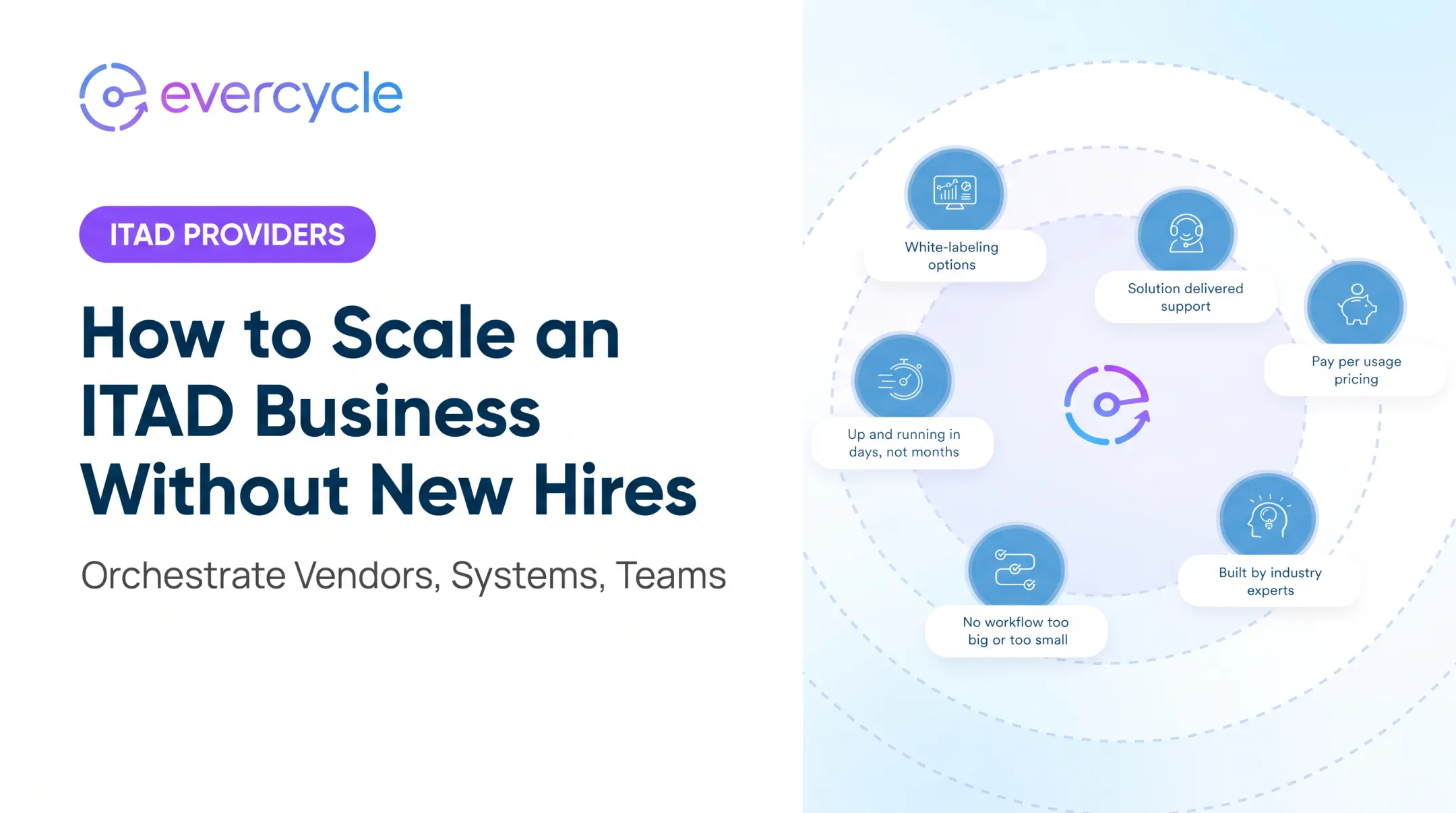
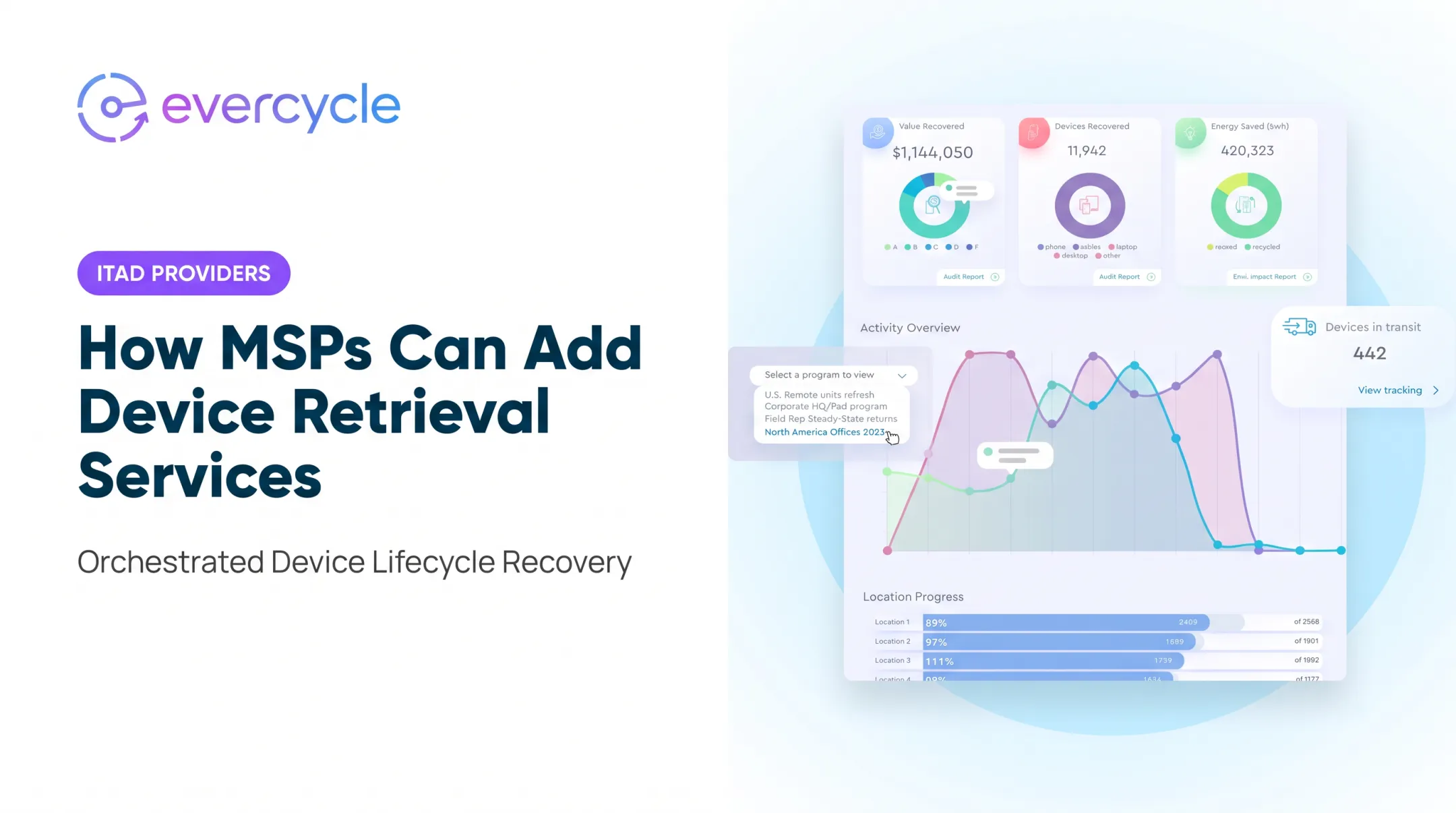
Software can unify asset data, employee communications, vendor routing, logistics status, and custody events across your existing systems and partners. Evercycle provides this orchestration layer. It works with your existing vendors and systems, offers white-label options for MSPs, and leaves physical processing and shipping to your ITAD and logistics partners.
How the MSP–ITAD Partner Workflow Works
Map the process from trigger to final report:
- Identify the trigger, such as a refresh or departure.
- Capture client requirements for data handling, timelines, and reporting.
- Get authorization before any device leaves the site.
- Recover the equipment through scheduled pickup or mail-back.
- Reconcile inventory against the original asset list.
- Sanitize or destroy data to the agreed standard.
- Determine disposition: reuse, resale, or recycle.
- Deliver reports and settlement so the MSP can close the loop with the client.

Assign an owner to each handoff:
- Client communication
- Shipping instructions
- Pickup scheduling
- Exceptions
- Data-security approvals
- Value-recovery decisions
- Final sign-off
Then monitor what goes wrong in a shared escalation process, not scattered email threads. Common issues include open returns, missing assets, late documentation, failed sanitization, damaged equipment, and disputed valuations.
Platforms like Evercycle can flag delayed workflows and devices lacking chain-of-custody records.
How MSPs Can Package and Monetize Resold ITAD
Choose the right commercial model
Referral-only asks the least of you and earns the least. Each step up adds control and responsibility:
- Pass-through coordination
- Bundled lifecycle management
- Co-branded programs
- White-label delivery
Match the model to your sales skill, support capacity, desired brand control, and tolerance for escalations.
Build transparent pricing and margin rules
Model these costs up front:
- Shipping, pickup, and handling
- Sanitization or destruction
- Storage, testing, and refurbishment
- Recycling, reporting, and platform fees
- Special projects
Common revenue structures:
- Fixed fees and per-device pricing
- Recurring program and coordination fees
- Partner discounts and revenue share
- Recovered-value credits

Don't assume a margin until you have verified partner pricing. Document who absorbs:
- Freight changes and failed returns
- Low-value assets and damaged equipment
- Storage extensions
- Devices that must be destroyed instead of resold
Sell through existing client conversations
Ask during regular reviews:
- When is the next refresh, and what happens to the old devices?
- How do you recover laptops from remote employees who leave?
- What aging inventory is sitting in storage?
- Are any offices or data centers closing?
- Which regulations or sustainability reports require disposal evidence?
Sell outcomes, not disposal alone:
- Secure recovery with fewer handoffs
- Documented accountability and asset visibility
- Possible value recovery
Disposal by itself is a hard sell.
Set expectations in the agreement
Your proposal or master service agreement should cover:
- Scope, responsibilities, and turnaround
- Data handling, reporting, and liability
- Insurance, value ownership, and approvals
- Exceptions and escalation
Don't promise certifications, recycling outcomes, destruction methods, or recovery values the partner can't document.
How to Choose and Launch the Partner Program
Evaluate operational, security, and downstream capabilities
Build a due-diligence checklist:
- Sanitization and destruction methods
- Chain of custody and serialized tracking
- Facility controls
- Downstream vendor oversight
- Environmental practices
- Insurance and geographic coverage
- Reporting and multi-site recovery experience
Review current evidence, contracts, references, and audit materials. Use the R2 facility directory to confirm status and scope. A partner's credentials never transfer to you, and marketing claims aren't proof.
Align the partner with your brand and operating model
Confirm whether the partner supports referral, reseller, co-branded, or white-label delivery. Decide who talks to the client and how you receive status updates, reports, settlements, and exception alerts.
Then build a service catalog that covers:
- Approved pricing
- Client-facing language
- Intake forms
- Escalation contacts
- Rules for special-handling assets
Launch with a controlled pilot
Start with one refresh or offboarding workflow for a few suitable clients. Track:
- Return completion and inventory reconciliation
- Turnaround time
- Documentation completeness
- Exception volume
- Recovered value
- Client satisfaction and MSP staff effort

Use the results to fix pricing and process before expanding.
When you scale past the pilot, Evercycle can orchestrate device lifecycle workflows across your existing systems, vendors, employee communications, and reporting while your ITAD partner handles the physical work.
Frequently Asked Questions
What does MSP mean in retail?
In IT, MSP means managed service provider. It differs from a retail service provider, which sells consumer services, and from a reseller, which mainly sells products.
How does an MSP make money?
Through recurring service fees, project fees, bundled offerings, product or service margin, and sometimes value-recovery arrangements. TechTarget notes subscriptions are often priced per device. No standard margin applies.
What is the difference between MSP and reseller?
An MSP manages technology continuously under contract. A reseller primarily sells products or services. One company can be both.
How can an MSP resell ITAD services without handling the equipment?
A specialized ITAD partner performs logistics, data handling, processing, resale, recycling, and reporting. The MSP owns the customer relationship and commercial agreement.
What should an MSP look for in an ITAD partner?
Documented data-security procedures, chain of custody, asset-level reporting, downstream controls, value recovery, coverage, integrations, insurance, and clearly defined responsibilities.
Can an MSP offer ITAD under its own brand?
Yes, through co-branded or white-label agreements. The contract must define delivery, disclosures, partner accountability, and client reporting.