Introduction
A bad ITAD handoff rarely looks like a failure on day one. It looks like a pallet nobody claimed, a certificate that never arrived, or a departing employee whose laptop return stalled between two vendors.
Both vendors can act in good faith and the organization still ends up with untracked devices.
The stakes are real. The SEC's 2022 action against Morgan Stanley Smith Barney, which involved a $35 million penalty, stemmed from decommissioning failures, including servers that may have held unencrypted customer data.
Switching vendors is not a procurement event. It is a controlled change to custody, security procedures, logistics, reporting, value recovery, and internal responsibility. This guide walks through the no-gap approach: baseline, vet, phase the cutover, reconcile, then close out the incumbent.
Key Takeaways
- Treat the switch as a lifecycle and risk project, not a contract swap.
- Document ownership, custody, destruction status, and open credits before moving new work.
- Pilot or overlap vendors when your program is distributed or handles sensitive data.
- Measure continuity by asset-level records, custody events, certificates, and exception closure.
Why ITAD Vendor Changes Create Gaps
Gaps appear where one party's records end and the other's haven't started. Common gaps include:
- Assets that stay with the incumbent after the cutover date
- Duplicate or missing serial numbers
- Unclear ownership of scheduled pickups
- Status codes that don't map between vendors
- Delayed certificates of destruction
- Employees who never receive updated return instructions
- Open credits, invoices, or lease obligations that nobody closes
Warning signs you need a controlled transition
An abrupt switch is risky when any of these apply:
- Audit trails are incomplete
- Data-destruction work is still unresolved
- Inventory records disagree with each other
- You have high remote-device volume or multiple locations
- You handle regulated data
- Several downstream processors depend on the current vendor
What "without gaps" means
Make it measurable:
- Each asset has an owner and a status
- Every handoff is documented
- Data-bearing devices have a defined sanitization path
- Exceptions have a named escalation owner
- Internal systems match vendor records
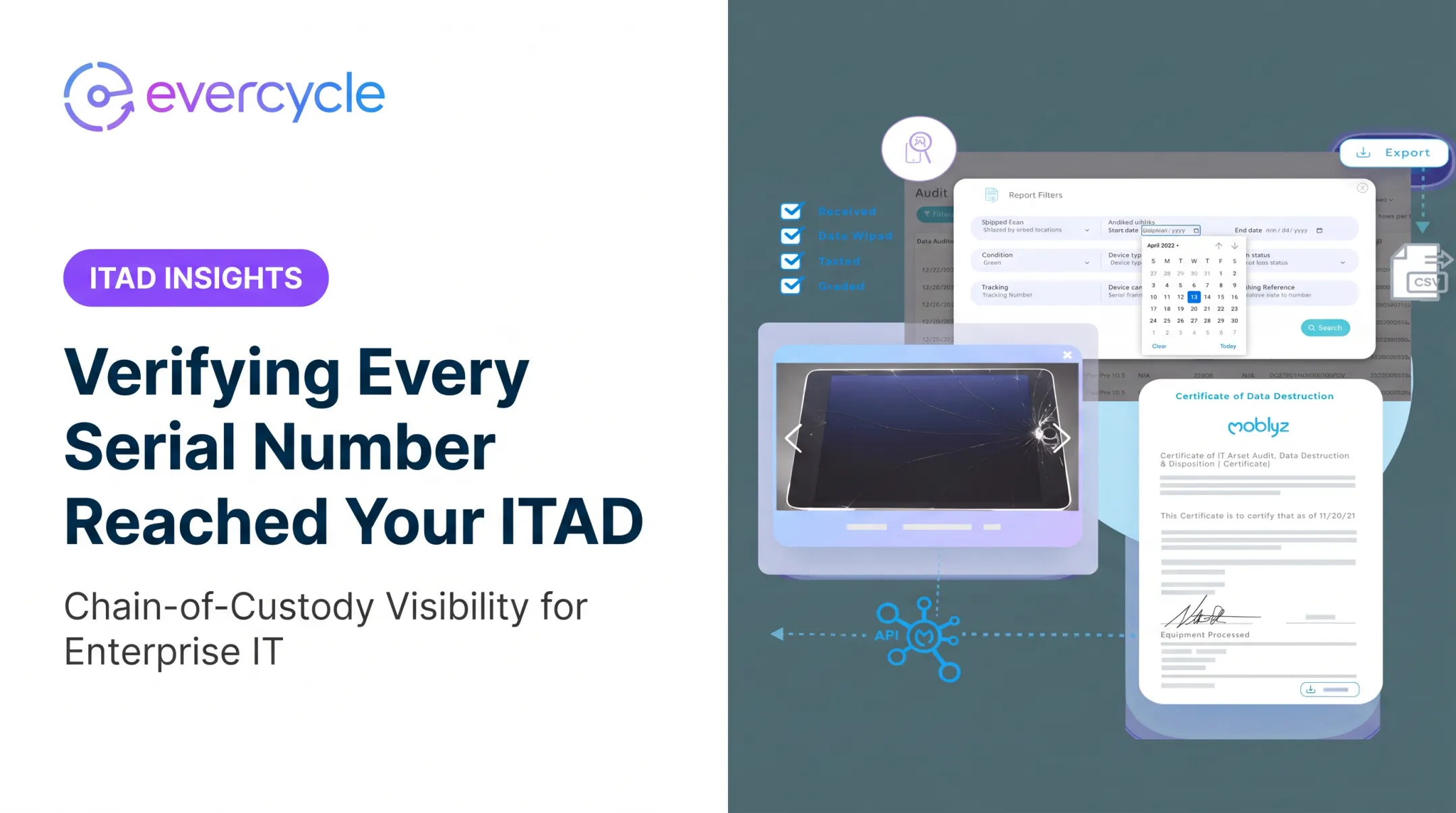
Chain of custody is the thread. NIST's glossary definition describes it as documenting movement, handlers, dates and times, and purpose. If a record can't show that, you have a gap.
Build the Transition Baseline Before You Switch
Don't issue work to the new vendor until you know what exists and who holds it.
Inventory and workflow
Build one inventory of in-scope assets with:
- Device type, serial number or asset ID, and location
- Assigned user and data classification
- Ownership or lease status
- Current disposition stage
- Who owns the next action
Then map the workflow end to end:
- Employee or site request
- Pickup and transport
- Intake, sanitization, and testing
- Resale, recycling, or destruction
- Reporting and payment

Mark manual steps, approvals, handoffs, and places where things have failed before.
Reconcile with the incumbent
Compare your records with the incumbent's. Ask for written confirmation of:
- Holdings still in transit
- Inventory awaiting processing
- Certificates still outstanding
- Resale or recycling still pending
- Open credits or invoices
Assign the RACI
Settle responsibilities before the first pilot. Cover IT asset management, information security, procurement, finance, facilities, HR or People Ops, and both vendors. Unowned steps are where devices vanish.
Set service and reporting requirements
Define the fields you need on every handoff:
- Pickup requests and employee communications
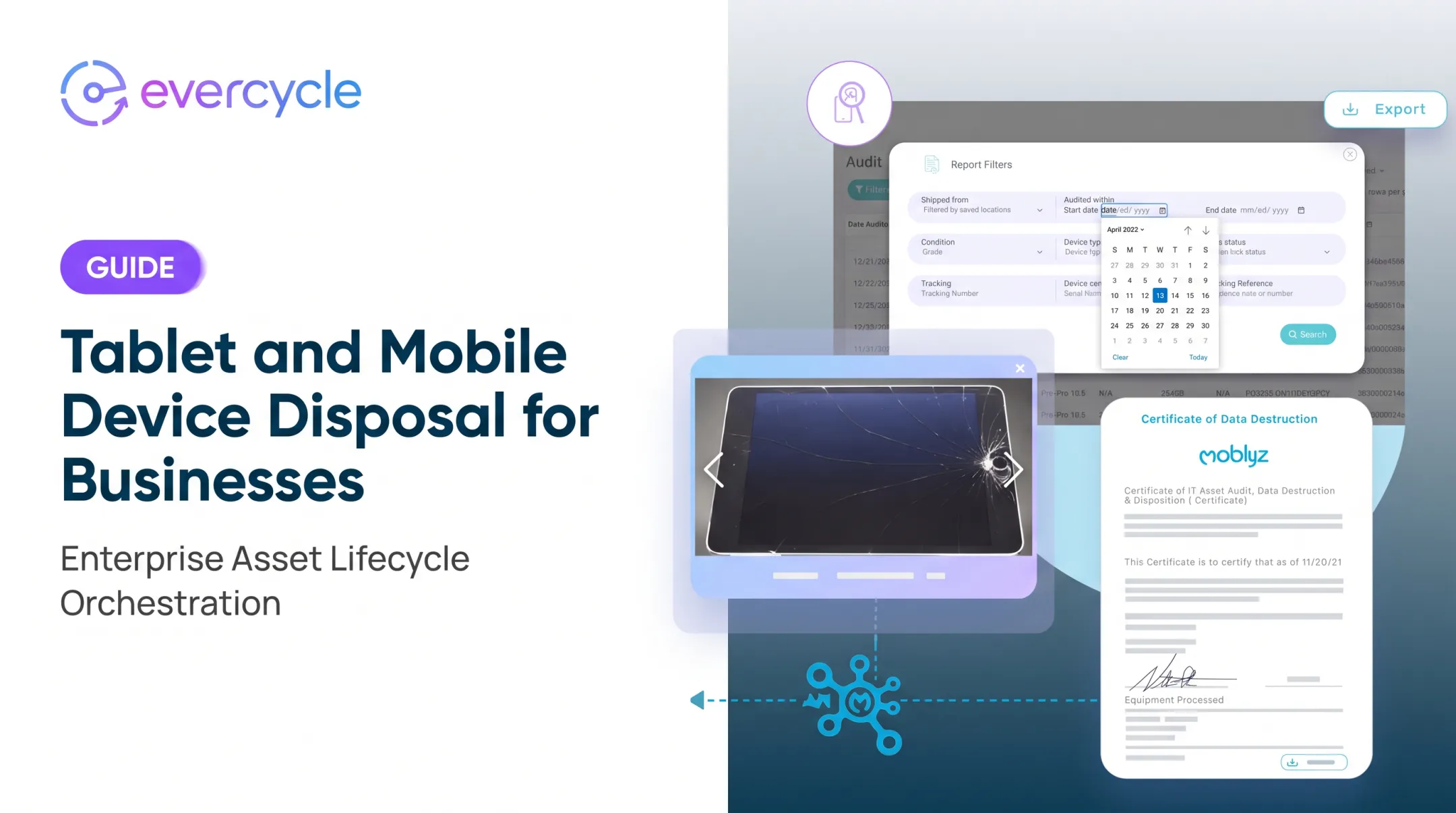
- Custody events and sanitization evidence
- Final disposition and exceptions
- Resale proceeds and environmental reporting
Then check which rules apply to your industry:
- HIPAA (45 CFR 164.310): covers final disposition of ePHI and media reuse. Required documentation is kept six years.
- FTC Safeguards Rule: applies to financial institutions under FTC jurisdiction, with provider oversight and contract requirements.
- PCI DSS v4.0.1: covers media in cardholder-data environments.
- CMMC and NIST SP 800-171: require sanitizing media containing CUI before disposal or reuse.
- State laws: California and Massachusetts both set disposal standards for personal information.
Retention periods vary by record type, so apply the rule for the specific record, not a blanket number.
Vet and Contract the Replacement ITAD Vendor
Match the vendor to your asset profile
Test fit against your real environment:
- Device types and data sensitivity
- Locations and remote workforce needs
- Volume and on-site requirements
- Redeployment and remarketing expectations
- Recycling pathways and leased equipment
Verify security before signing
Ask for specifics, not logos:
- Sanitization methods by media type, aligned to NIST SP 800-88 Rev. 2 (Clear, Purge, Destroy)
- Physical destruction options
- Chain-of-custody procedures and employee access controls
- Incident notification obligations
- Certificate details and audit rights
- Any subcontracted work and the downstream disposition route

Certifications help but have limits. NAID AAA covers secure destruction, not every downstream recycling or remarketing control. R2v3 and e-Stewards address downstream vendor management. ISO 27001 covers information-security management, not proof that a given drive was wiped.
Test reporting compatibility
Request samples of:
- Asset-level reports and status definitions
- Destruction certificates and downstream disclosures
- Value-recovery statements and exception reports
Confirm how those records connect to your ITAM, CMDB, ticketing, or procurement systems.
Write the transition into the contract
Put these in the contract or statement of work:
- Implementation milestones and pilot criteria
- Service levels and escalation contacts
- Data ownership and record-retention periods
- Business-continuity procedures
- Liability, insurance, and confidentiality terms
- Termination assistance
- Responsibility for assets already in custody
Insurance and liability caps are commercial terms with no universal federal minimum, so negotiate them against your risk.
Where Evercycle fits
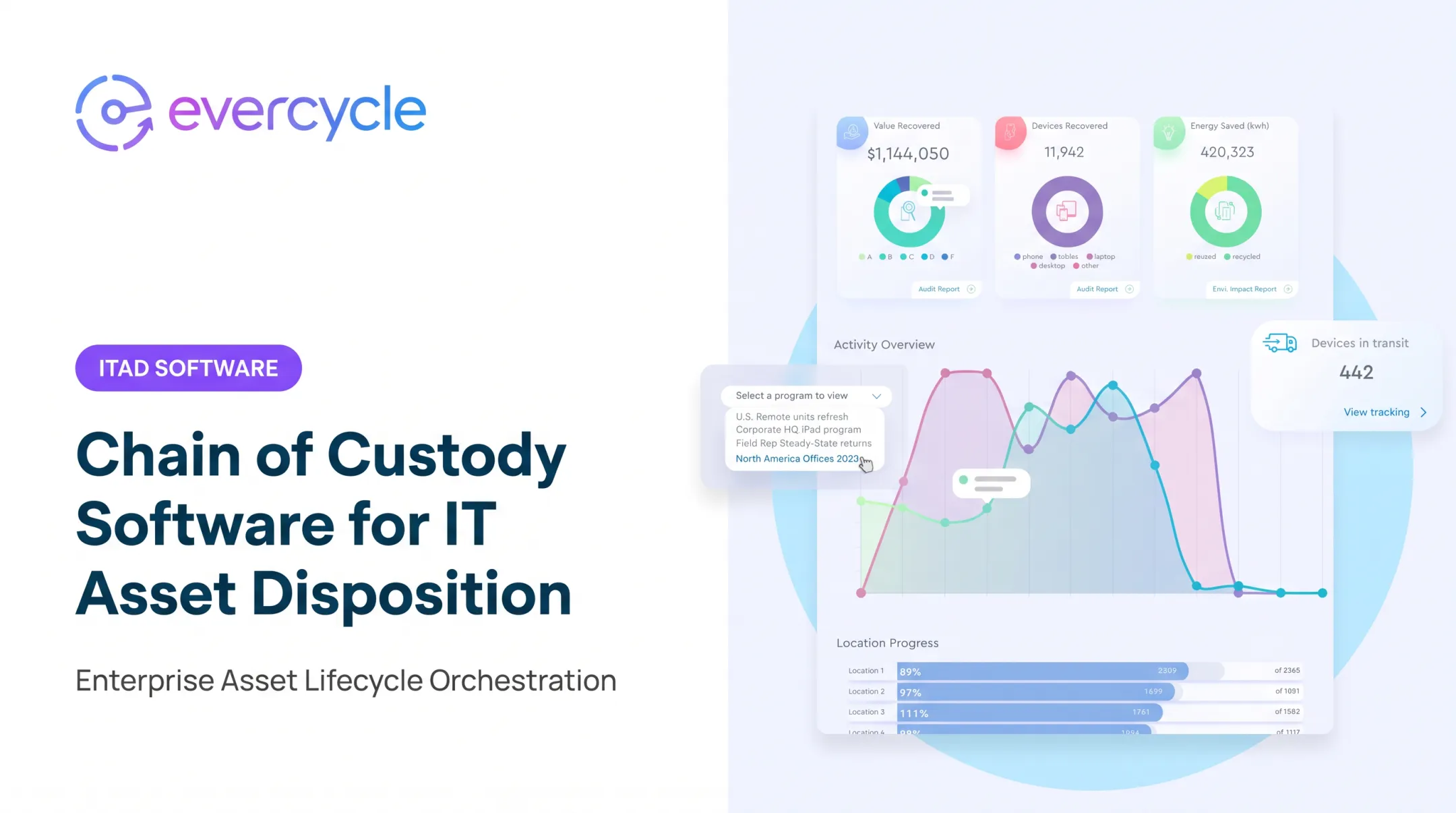
If you need to coordinate several providers or keep existing relationships, Evercycle is an orchestration platform, not a physical ITAD processor. It unifies asset data, workflows, vendor routing, employee communications, and audit visibility across the providers you already use. Physical processing stays with your selected vendors, and the platform doesn't replace vendor due diligence.
Execute a Phased Cutover Without Interrupting Operations
Pick a transition model
- Immediate switch: fits simple, transactional programs.
- Pilot: start with one device type, location, or workflow.
- Wave-based parallel operation: suits distributed enterprises, remote workforces, regulated data, and multi-vendor setups.

Match the model to your risk tolerance and program complexity.
Build the cutover plan
Set dated milestones with decision gates so the next wave proceeds only if the last one passed. Cover:
- Configuration and data mapping
- Training and communications
- Pilot intake and quality review
- Expanded rollout
- Final incumbent work and post-cutover support
Prepare materials for each participant:
- Pickup and packing instructions
- Employee return messaging
- Site procedures and escalation contacts
- Sanitization rules and approval requirements
- Exception codes
- Instructions for reaching reports and certificates
Run the pilot against your baseline
Compare the new vendor's results to your baseline on:
- Asset identification and custody events
- Turnaround time
- Sanitization evidence and final disposition
- Report completeness and value-recovery handling
- User experience
Expand only when the numbers hold.
Keep a transition ledger
For every asset and request, record the responsible party, status, next action, evidence received, exception owner, and closure date. Reconcile at set checkpoints so nothing disappears between internal systems, carriers, and ITAD platforms.
Use an orchestration layer where it helps
During handoff, a platform like Evercycle can connect enterprise systems and ITAD providers through unified visibility, automated routing, event-driven workflows, employee communications, and chain-of-custody reporting. In one distributed recovery program, more than 6,000 return kits were in transit within 48 hours of launch, though results vary by configuration and provider coverage. Software coordinates the work. Providers still do the physical processing.
Validate the New Process and Close Out the Old Vendor
Watch the first waves closely
Track leading indicators:
- Missed pickups
- Unassigned devices
- Delayed status updates
- Incomplete certificates
- Report mismatches
- Unresolved exceptions
- Employee or site escalations
Industry-wide numeric targets for these indicators are not standardized, so set benchmarks from your own baseline. NIST SP 800-53 MP-6 supports documenting and approving sanitization actions.
Close out the incumbent formally
- Confirm every asset has a final disposition or a documented owner.
- Collect outstanding destruction and disposition records.
- Settle credits and invoices.
- Export required historical data.
- Revoke system and facility access.
- Document any retained obligations.

Update policy and set a review cycle
Update these documents and systems:
- ITAD policy and asset procedures
- Security controls and offboarding instructions
- Vendor directory, training materials, and audit evidence repository
Then schedule recurring vendor reviews covering security, reporting accuracy, sustainability, service quality, value recovery, and scalability. The FTC Safeguards Rule calls for periodic provider reassessment but sets no fixed interval, so pick one that fits your risk.
Frequently Asked Questions
How do I switch ITAD vendors without interrupting service?
Baseline your inventory and open work, choose a transition model, and pilot the new process. Reconcile asset-level records before expanding the cutover.
Should I use both ITAD vendors during the transition?
Use parallel operations or a limited pilot when your program is distributed, integrated, or sensitive. Assign clear ownership and controls for any asset moving between vendors.
What information should I transfer to the new ITAD vendor?
Send asset identifiers, locations, user or site details, data classification, and disposition requirements. Add logistics instructions, reporting fields, compliance obligations, and known exceptions.
How do I protect sensitive data while changing ITAD vendors?
Reconcile custody, require approved sanitization methods, and document every handoff. Control access, collect destruction evidence, and review assets the incumbent still holds.
How long does it take to switch ITAD vendors?
It depends on fleet size, locations, data sensitivity, integrations, and contract terms. No reliable benchmark exists, so build milestones and decision gates rather than relying on a generic timeline.
What should I do with assets still held by the old ITAD vendor?
Keep a verified custody list and decide whether to finish processing or recall each asset. Obtain destruction or disposition evidence, resolve financial obligations, and document the final decision.