Introduction
A pickup count and a final certificate feel like proof. They aren't. Neither tells you whether the 412 laptops on your retirement list are the 412 that reached the provider.
The SEC's order against Morgan Stanley Smith Barney shows the risk. In a 2017 decommissioning of 61 servers and 244 hard drives, the SEC administrative order found that a vendor certificate did not identify each drive. A later serial list did not match the bank's records.
This guide is for ITAM, IT, compliance, and security teams. It walks through verification before pickup, at ITAD receiving, and during final reconciliation. You will learn what evidence to keep and how to handle missing, duplicated, or inconsistent serial numbers.
Key Takeaways
- Freeze and validate the source inventory before pickup.
- Use a signed, serialized manifest and require the provider to confirm every received device.
- Reconcile inventory, manifest, receipt, and disposition records, not totals.
- Hold unmatched assets and assign an owner before closing the job.
What You Need to Verify That Every Serial Number Reached Your ITAD
Reliable verification means comparing consistent device-level records at defined custody points. Asking "did the shipment arrive?" doesn't do that.
Tools and Records Required
Gather these records and tools:
- ITAM or asset inventory export
- Asset tags and manufacturer serial numbers
- Pickup manifest
- ITAD receiving report and final disposition report
- Barcode or QR scanner
- A controlled spreadsheet, database, or reconciliation system
Each record needs a minimum set of fields for identity and routing:
- Serial number and asset ID
- Make and model
- Expected disposition
- Source location
- Pickup or batch identifier
It also needs status and outcome fields:
- Custody timestamps
- Receiving status and exception status
- Final outcome
For disposition records, NIST SP 800-88 describes what a completed certificate of sanitization should carry. Include manufacturer, model, serial number, property number if applicable, media type, method, tool and version, and verification method. That is guidance, not a statutory mandate.
Preconditions and Setup
Timestamp or freeze the expected inventory before anything is packed. Then remove duplicates, blanks, obsolete records, and obvious serial formatting problems. Keep the original export untouched.
Set up the physical side too:
- Use a restricted staging area.
- Name the person authorized to release custody.
- Make sure labels are readable.
- Agree that no device moves to processing while a receiving discrepancy is open.
If you use multiple ITAD providers or distributed return locations, assign a unique batch or work-order ID to every pickup. Every serial number should trace to the right pickup and destination.
Methods to Verify Every Serial Number Reached Your ITAD
These three methods are checkpoints, not alternatives. Pre-pickup reconciliation prevents errors, receiving verification proves arrival, and final reconciliation confirms the evidence is complete. The standards support tracking and receipt records, but none prescribes this exact workflow, so treat it as a control design.

Method 1: Reconcile the Source Inventory Before Pickup
This compares the approved ITAM list with the devices physically staged, confirming which serial numbers are expected to leave.
Tools: a frozen inventory export, a barcode scanner or mobile capture tool, asset labels, a discrepancy log, and an employee who can approve the release list.
- Export and standardize. Pull the current asset list and normalize serial formatting without altering the source record.
- Scan and match. Scan each staged device, match it to the list, and flag missing, duplicate, unreadable, or unexpected serials.
- Finalize and sign. Complete the serialized manifest, log unresolved exceptions, and get sign-off from the releasing representative and the pickup representative before loading.
Pros: It catches inventory errors before custody changes. Cons: It can't prove the provider received every listed device.
Method 2: Verify the Shipment Against the ITAD Receiving Record
This confirms each serial on the signed manifest physically arrived at the ITAD facility or designated receiving point.
Tools: the signed manifest, the provider's receiving scan or intake report, device labels, a shipment or work-order ID, and a documented exception workflow.
- Compare before mixing. Require the provider to check the shipment against the manifest before devices enter general processing or inventory.
- Record every status. Mark each serial as received, missing, unexpected, duplicate, or unreadable. Keep the timestamp and the responsible person or system record.
- Hold and escalate. Put discrepancies on hold, notify your internal owner, and document the resolution before marking the shipment complete.
Pros: It is the strongest direct evidence of arrival. Cons: It depends on consistent provider-side scanning and a clearly defined receiving process.
Method 3: Complete a Three-Way Final Reconciliation
This compares the approved source inventory, the signed pickup manifest, and the ITAD receiving report. It then connects matched records to sanitization, resale, recycling, or destruction outcomes.
Tools: a reconciliation report or database join that highlights missing, extra, duplicate, and conflicting serials, plus certificates or processing records tied to individual devices.
- Match on serial and batch ID. Keep asset tags and model as secondary validation fields.
- Investigate every exception. Record the explanation and resolution. A matching shipment count doesn't close an asset.
- Build the evidence package. Save the reconciliation, manifests, receiving evidence, processing records, and sign-offs together.

Pros: It gives the fullest audit trail and catches late discrepancies. Cons: It's a closing control and can't replace a real-time receiving check.
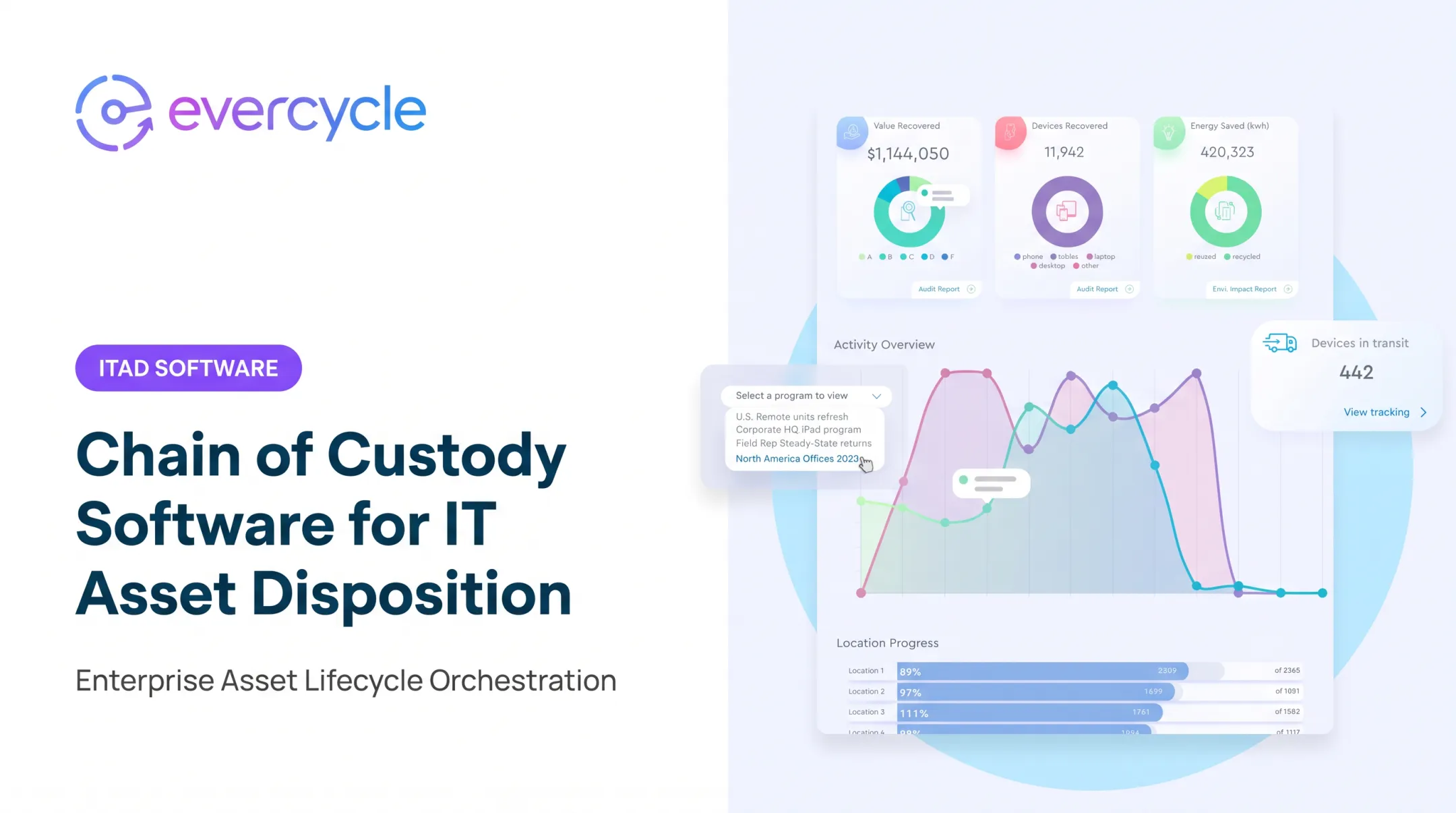
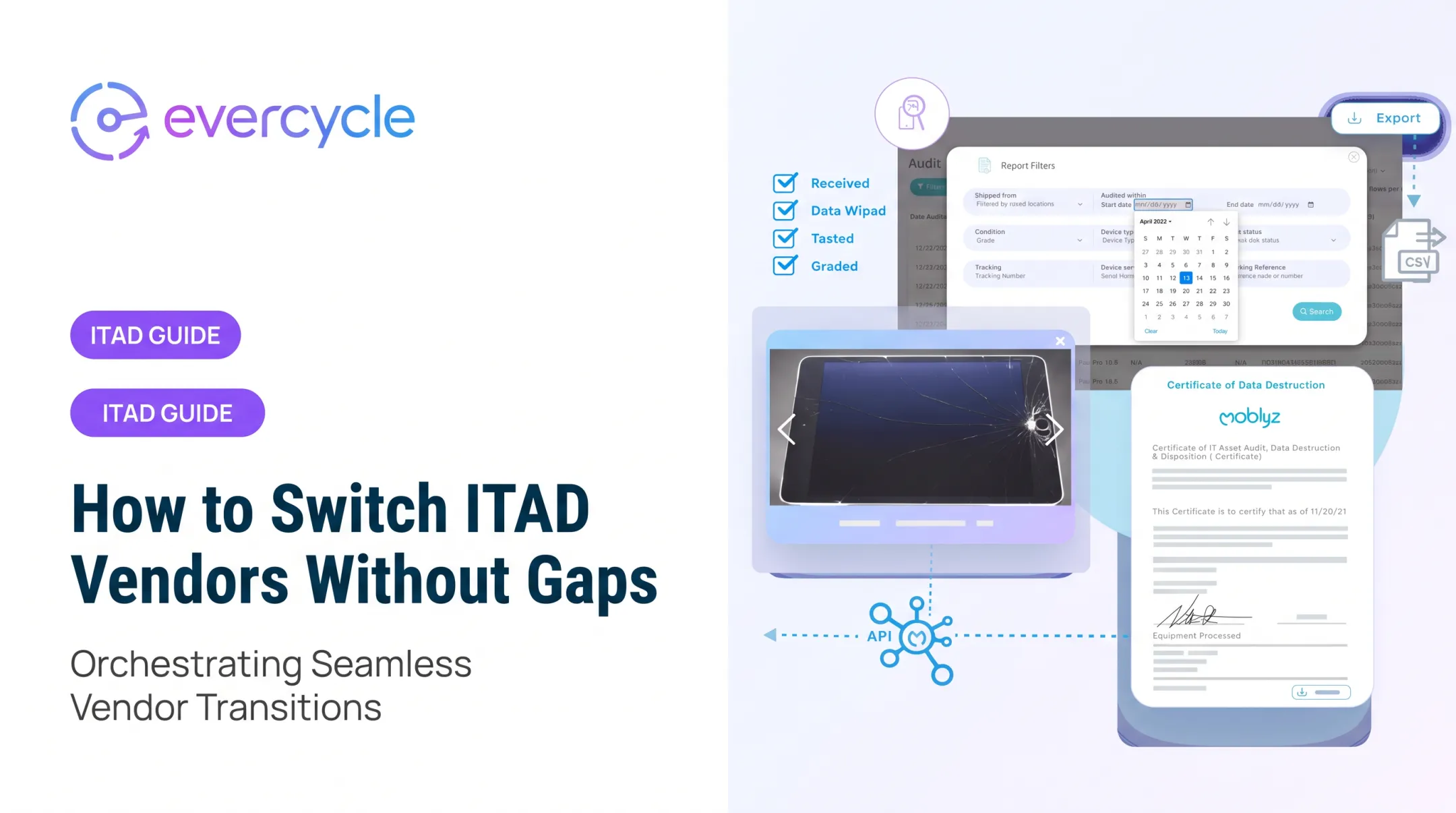
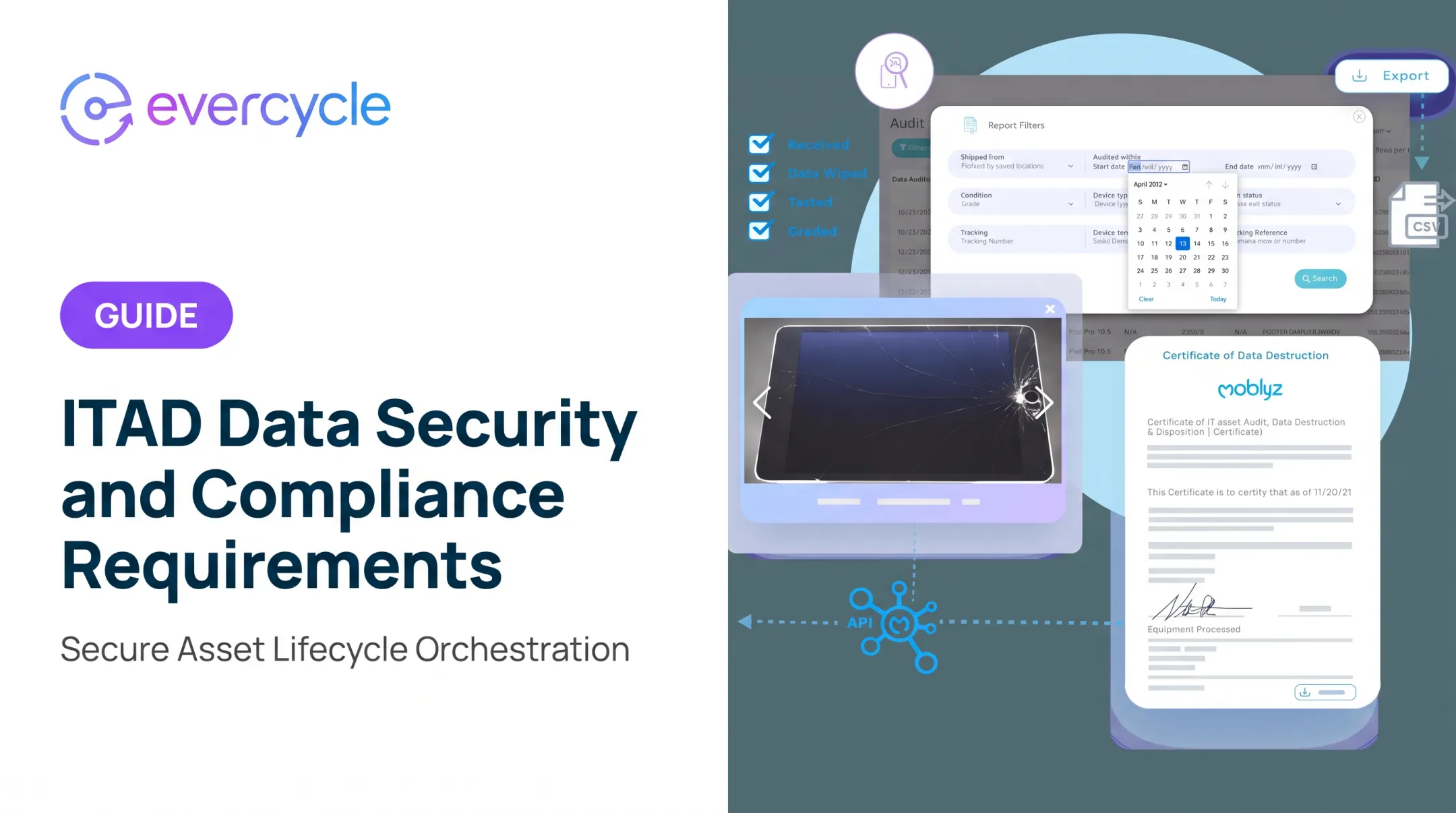
Sustaining all three checkpoints is simpler when serial data and custody events stay linked. A lifecycle orchestration platform such as Evercycle can connect asset data, vendor workflows, custody events, and audit reporting across existing ITAD providers.
Evercycle Insight accepts a manifest upload or integrates with an MDM or inventory system, and its quick-scan receiving journal flags unexpected package contents before data erasure. The platform coordinates and reports. It doesn't physically process or transport devices.
How to Interpret the Results
A correct total can hide a missing device, a duplicate record, or an unplanned replacement. Read results serial by serial.
Normal and Acceptable Results
You want a one-to-one match across the approved source list, signed manifest, receiving record, and applicable final disposition record. Identifiers and timestamps are consistent, custody approvals exist, and no exceptions remain open.
Minor Issues
These are usually fixable:
- Capitalization or spacing differences
- A scan that needs manual confirmation
- A duplicate asset tag
- An unreadable label corroborated by approved evidence
Correct the record transparently and keep the original value.
Out-of-Spec Results
Treat these as failures:
- Missing expected serials
- Unexpected received devices
- Duplicate serials
- Certificates without device-level identifiers
- Receiving records without a responsible sign-off
Handle every case the same way. Hold the asset, notify the ITAD provider and your internal owner, and trace the last confirmed custody point. Document the resolution, and escalate potential loss or exposure through your incident process.

Don't borrow a tolerance from elsewhere. The e-Stewards 5% figure applies to material-balance accounting, not to a permitted share of unmatched serials, and those standards do not set a serial-level acceptance threshold.
Inventory quality matters too: a New York Comptroller audit found 17,887 workstations categorized as absent, plus duplicate or blank serial data. It covers a state agency, not an ITAD vendor.
Common Errors and Safety Best Practices in Verifying Serial Numbers Reached Your ITAD
Most failures come from weak identifiers, unstructured handoffs, or unsafe handling, not from the comparison itself.
Common Verification Errors
- Using device counts, pallet totals, or batch certificates instead of serial-level records
- Confusing the manufacturer serial with the internal asset tag (use both, and define which is authoritative)
- Skipping normalization, or editing spreadsheets late
- Omitting receiving scans at intake
- Treating a destruction or recycling certificate as proof the device arrived
A certificate says what happened to something. It doesn't say your specific device was there.
Safety and Best Practices
- Restrict staging and receiving areas, and control access to data-bearing equipment.
- Document every custody handoff and preserve original records and scan evidence.
- Use safe lifting and packing practices, with protective equipment for bulk handling.
- Follow approved procedures for any device that must be powered on or inspected beyond its external identifier.
- Follow OSHA's 2025 guidance on lithium-ion batteries: dry, cool storage and limited quantities.
- Apply stricter transport rules for damaged or defective batteries.
Never silently alter a disputed serial number or keep processing an unmatched device. Preserve the evidence, isolate the exception, and follow your escalation path.
Conclusion
A pickup receipt isn't enough. Validate each expected serial before release, confirm it at ITAD receiving, and reconcile it against final records.
Serialized evidence exposes missing assets and custody gaps while there's still time to investigate. Use consistent identifiers, documented exception handling, and connected lifecycle reporting so every device stays accountable.
Frequently Asked Questions
What does it mean to verify every serial number reached ITAD?
Match the expected serial list, pickup manifest, and ITAD receiving record device by device. Document and resolve every discrepancy.
Which records should be compared during ITAD serial-number reconciliation?
Compare the source ITAM inventory, signed pickup manifest, ITAD receiving report, and any final disposition or processing records.
Is an ITAD certificate with a device count enough?
No. A count can't prove a specific device arrived or was processed. You need device-level identifiers.
What should you do if a serial number is missing from the ITAD receipt?
Place the asset on hold and check the last confirmed custody point. Contact the provider, document the investigation, and escalate if it stays unresolved.
When should serial numbers be verified during the ITAD process?
Verify at three checkpoints: before pickup, when ITAD receives the shipment, and during final reconciliation.
Can software automate serial-number reconciliation across ITAD vendors?
Yes, lifecycle orchestration software can compare records, route exceptions, and centralize custody evidence across providers. Physical receiving and provider accountability still matter.